 Adding item to the basket...
 25+ years industry experience
 Expert support from design to installation
 Fast UK-wide delivery available


This is a carousel. Use the previous and next buttons to navigate.
The Rise of the Light Trail: Creating Experiences After Dark
Light trails have come a long way from a few illuminated trees and a Christmas tree at the end of the path.
From woodland walks and illuminated gardens to Halloween experiences, town-centre trails and even trails built around local history, the format has become an increasingly popular way to encourage people to explore a space after dark.
While Christmas remains a huge part of the light trail landscape, the idea itself is much broader. A light trail can tell a story, encourage exploration, bring people together or simply offer a reason to experience a familiar place in a completely different way.
At its simplest, a light trail is about movement through a space.
Rather than standing in one place and looking at a lighting display, visitors are encouraged to walk, explore and discover what comes next. That might mean following a defined route through a woodland, moving between illuminated installations in a garden, or making your way through a town centre searching for themed displays.
The route itself can be part of the experience.
A trail could be based around a story or theme, perhaps an enchanted woodland, a fairytale or the North Pole, but it doesn't necessarily need to be fictional. The location itself can provide the story.
The National Memorial Arboretum, for example, has used light, sound and colour to create an illuminated trail through its grounds, incorporating the site's own history and significance into the experience.
The result is something much more meaningful than simply putting lights along a path. The lighting helps people experience the place.
Part of the appeal is simple: they give people something to do and create an opportunity to come together. For many, particularly during the winter months, a light trail can also mark the start of the festive season, giving people something to look forward to as the darker evenings arrive.
We're increasingly looking for experiences that we can share with family and friends, rather than simply something to buy. A light trail turns an evening into an activity, something to explore, photograph, talk about and remember.
For families, there is the added appeal of creating traditions and memories. A child seeing an illuminated installation for the first time, taking a yearly photo in front of a particularly impressive feature or completing a trail around a town can become part of an annual tradition.
For younger audiences, social media also plays a role. A particularly impressive installation or photo opportunity can become part of the experience itself, giving visitors something worth sharing.
And perhaps most importantly, there is something inherently different about seeing a space after dark. The contrast between light and darkness can make familiar surroundings feel atmospheric, magical or mysterious.
It's not necessarily about making everything brighter. Sometimes, the darkness is just as important.
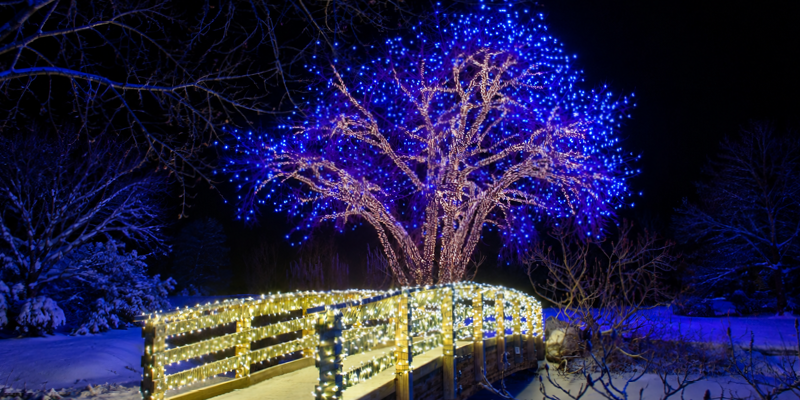
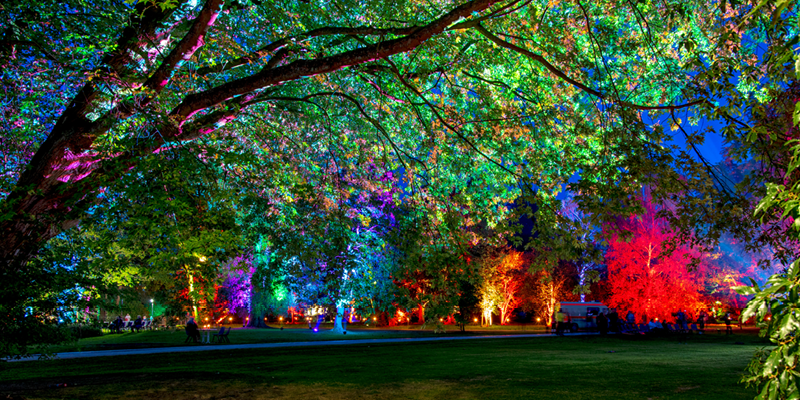
When we think about light trails, it's easy to picture the classic formula: Christmas music, festive food, reindeer, snowflakes and a big Christmas tree.
But the growing popularity of Halloween trails shows just how adaptable the format can be.
Halloween is particularly well suited to an after-dark experience. Nights are drawing in, and the contrast between light and darkness can be used to create something mysterious, atmospheric or genuinely spooky.
Colour can help establish the mood, too. Traditional Halloween colours such as orange, red and purple can create a very different atmosphere from the warm whites and traditional colours often associated with Christmas.
And then there are shadows.
For Halloween, areas of darkness, silhouettes and controlled lighting can be just as effective as the illuminated features themselves. Add projection, sound or even smoke effects, and the same space can become almost unrecognisable.
But Halloween doesn't have to mean scary. A trail can be spooky, mysterious, playful, family-friendly or even a little bit cute. The theme, rather than the lighting alone, determines the experience.
There is also an opportunity to think about what can be reused. If you're creating a Halloween trail in a space that will later become a winter or Christmas trail, much of the background coverage could potentially stay in place, with seasonal features and lighting effects changing to create a completely different atmosphere.
So, while the traditional Christmas light trail may have helped establish the format, there's no reason for the idea to stop there.
One of the easiest mistakes when planning a light trail is to start by looking through a lighting catalogue and choosing the products you like.
Instead, start with the journey. What do you want people to experience?
Perhaps you're creating an enchanted woodland, taking visitors on a journey through the North Pole, or encouraging people to explore a town centre while following a local story or treasure hunt. Whatever the theme, the lighting should help bring that journey to life.
Once you know what the intended experience is, walk the site. Look for natural stopping points, interesting features, areas where people already congregate and places where you can create a sense of anticipation. Think about where you want the key moments to happen, and how you can encourage visitors to keep moving from one area to the next.
Only then should you start thinking about the lighting.
Key features can provide the memorable moments, while background lighting such as wrapped trees, uplighters or festoon can help connect those moments together and guide visitors through the space.
And this doesn't mean every part of the route needs to be illuminated. In fact, keeping some areas darker can make the illuminated moments feel even more magical.
A successful trail needs contrast. If every tree, path, building and feature is illuminated, there is nowhere for the eye to rest and nowhere for the brighter installations to stand out.
Think about creating moments of discovery instead. A lit feature glimpsed between trees can encourage people to keep walking. A brightly illuminated installation in an otherwise dark clearing can create a real sense of arrival. A sequence of illuminated arches or trees can gradually lead visitors from one area to another.
Even simple light strings can be incredibly versatile. They can be used to edge paths, wrap trees, drape over bushes, create tunnels and canopies, or even be shaped into more unusual forms.
You don't necessarily need more lighting. You may simply need to use it differently.
Christmas at Kew and Glow Wild have become major visitor attractions in their own right. In 2023–24, Kew reported more than 350,000 tickets sold for Christmas at Kew and more than 80,000 for Glow Wild at Wakehurst.1
There is a perception that a light trail needs to be a huge, ticketed attraction with enormous installations and thousands of visitors.
It really doesn't.
For a town centre, a relatively simple trail could encourage people to move between businesses and different parts of the town. You could create a theme around a collection of motifs, perhaps a series of stars each with its own name, and encourage visitors to find them all.
A competition or activity at the end can give people a reason to complete the journey.
For a woodland, holiday park, tree farm or similar venue, a handful of feature installations combined with trees, light strings and uplighters could create a surprisingly atmospheric experience.
The key is to start with what you have.
Existing trees can provide height and natural hiding places for installations. Festoon can help define a route, create tunnels or even form a ceiling of light. Light strings can be used in countless ways to create atmosphere without requiring a huge investment in feature lighting.
Then, as visitor numbers and feedback grow, the experience can grow too.
Perhaps year one establishes the route and a few memorable focal points. The following year, you add more coverage or introduce new features. Eventually, you might invest in animation, interactive elements, colour-changing lighting or projection mapping.
You don't have to create the finished trail in its first year.
It's easy to focus on the lights because they're the most visible part of a trail.
But a successful light trail is an event as much as it is a lighting project.
There are practical considerations around pedestrian flow, power, installation, maintenance, weather and emergency access. Depending on the venue, you may also need to think about car parking, ticketing, first aid, crowd management, muddy conditions and what happens if the weather turns particularly unpleasant.
These things might not be as exciting as choosing your lighting, but they can have a huge impact on the visitor experience.
At the same time, your first trail needs to live up to what you've promised visitors. There is a balance between trying to do too much and creating an experience that feels underwhelming. If people are paying to attend, or travelling specifically to visit your trail, the overall experience needs to feel considered and complete from the outset.
That doesn't necessarily mean buying everything outright. Hiring a lighting scheme can be a way to create a stronger experience from the beginning while spreading the investment over several years. It can also give you the opportunity to see what works, understand visitor feedback and build on the experience each year without having to make the entire investment upfront.
And that's where the right expertise can make a real difference. Bringing together the people who understand the site, event management, lighting, installation and visitor experience can help identify potential issues before they become expensive problems.
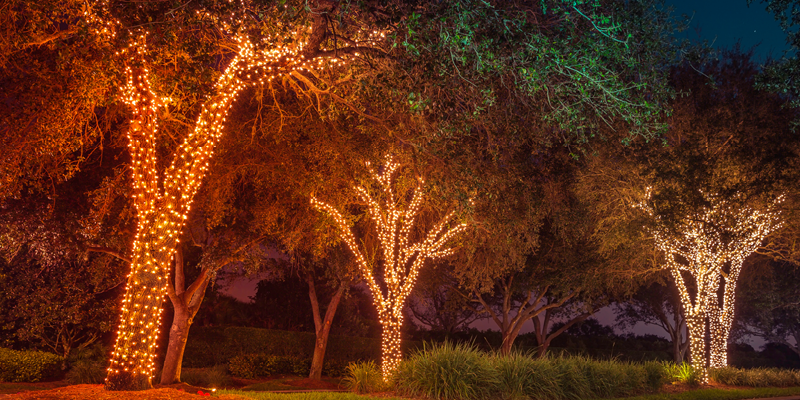
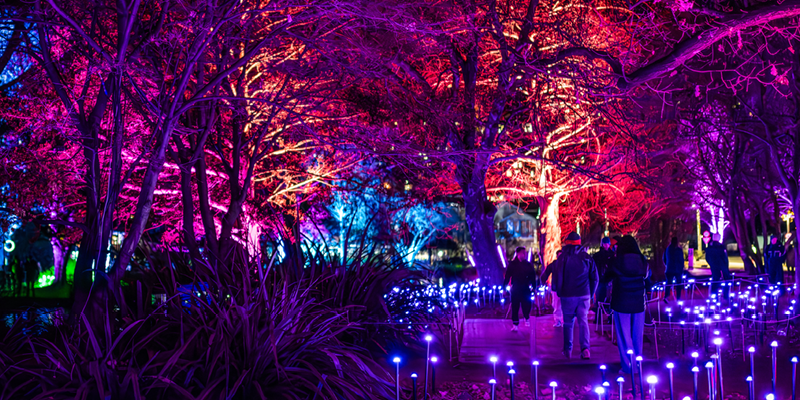
The future of the light trail may not necessarily be about extending the same Christmas trail throughout the year.
Instead, it could be about adapting the concept to different seasons and audiences.
The darker months naturally lend themselves to illuminated experiences. A Halloween trail in October could transition into a winter experience running through November, December and into January or February.
For holiday parks, caravan sites and other destinations with quieter periods outside the summer season, this could create an additional reason for visitors to visit during months when there is traditionally less activity.
And the concept of a trail doesn't always have to involve lighting.
During the lighter months, town centres have successfully used shop-window trails and public art trails to encourage people to explore. The format may change, but the fundamental idea remains the same: give people a reason to follow a journey and discover something along the way.
Perhaps the biggest change in light trails is that we're no longer simply decorating a space.
We're creating an experience within it.
The most memorable trails aren't necessarily the ones with the most lights. They're the ones that give visitors a reason to keep walking, something to discover around the next corner and a moment they'll want to photograph, share or remember.
That could be a spectacular feature in a large open space, a tiny illuminated detail hidden amongst the trees, a local story brought to life through projection, or simply a beautifully lit route that makes an ordinary place feel different after dark.
So, if you're thinking about creating a light trail, don't start with “What lights should we buy?”
Start with:
“Where do we want people to go, and what do we want them to experience when they get there?”
The lighting comes next.
References:
Every space has the potential to become an experience after dark. Talk to our team about your ideas and discover how lighting can help create a journey visitors will remember.
CONTACT US